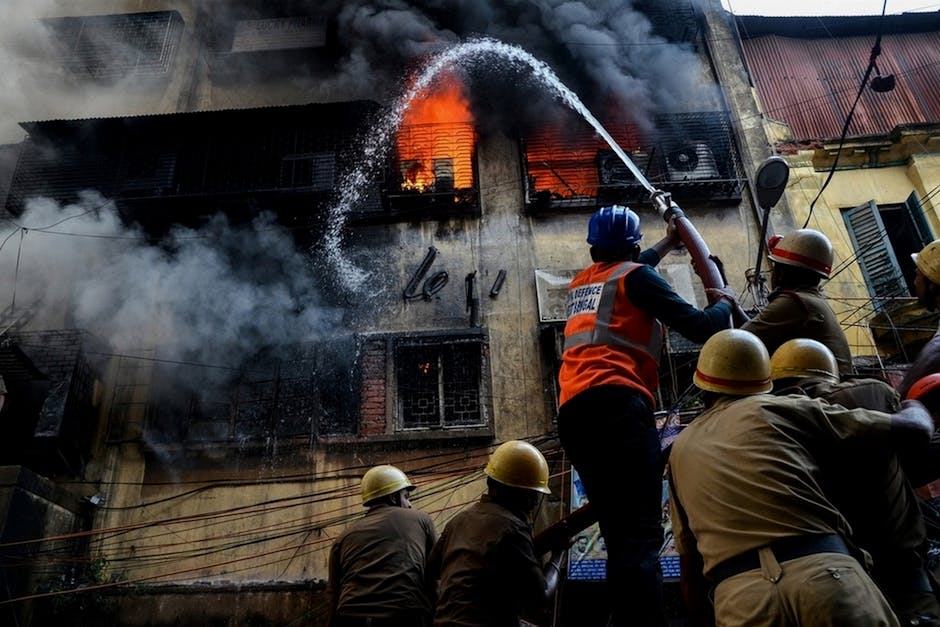
The Role of AI in Disaster Response: Saving Lives and Mitigating Damage.
The Role of AI in Disaster Response: Saving Lives and Mitigating Damage.
Reading Time: 8 mins
From Chaos to Clarity: AI's Eye on Impending Disaster
From Chaos to Clarity: AI's Eye on Impending Disaster
From wildfires engulfing California to hurricanes battering the Gulf Coast, the speed and scale of modern disasters often overwhelm traditional warning systems. But what if we could see the storm gathering, not just on radar, but in the subtle shifts of data points across seemingly unrelated fields? That's the promise of AI-powered disaster prediction.
Machine learning models are now sifting through vast datasets – weather patterns, social media activity, economic indicators, even historical infrastructure weaknesses – to identify early warning signs invisible to the human eye. Imagine an algorithm detecting a surge in water pump failures in a drought-stricken region, coupled with increasing social media posts about water scarcity, flagging a potential humanitarian crisis weeks before it erupts.
This isn't just about predicting if a disaster will strike, but where and how hard. Companies like One Concern are already using AI to model the impact of earthquakes on specific buildings, allowing cities to prioritize resources and strengthen vulnerable infrastructure before the ground starts shaking. Market size estimates for AI in disaster management suggest a multi-billion dollar industry within the next five years, signaling significant investment and innovation.
However, challenges remain. Data bias is a major hurdle. If the data used to train an AI model is skewed towards wealthier communities, the system may be less effective at predicting risks in underserved areas. The "cry wolf" problem is also real. Too many false alarms can erode public trust and lead to complacency, hindering effective responses when a real threat emerges. Ensuring transparency and accountability in these AI systems is paramount to building public confidence and maximizing their life-saving potential.
Predictive Lifelines: How Machine Learning Anticipates the Unthinkable
Predictive Lifelines: How Machine Learning Anticipates the Unthinkable
Predictive Lifelines: How Machine Learning Anticipates the Unthinkable
Imagine a world where we see the first tremors of a societal earthquake weeks before the ground cracks. This is the promise, and increasingly the reality, of using machine learning to predict disasters. Instead of reacting to the aftermath, we can proactively mitigate risk.
Machine learning algorithms thrive on data, and the world generates it in staggering volumes. From seismic sensor readings to social media chatter, every piece of information is potential fuel for predictive models. These models analyze patterns invisible to the human eye, spotting correlations that signal an impending crisis.
Consider One Concern, a Menlo Park-based startup. They use machine learning to forecast the likely impact of floods, wildfires, and other disasters. Their models ingest weather data, topographical maps, and even building construction information to estimate the potential damage block by block. Early warning systems empowered by this level of granular prediction can save lives and reduce property losses.
However, this predictive power isn't without its challenges. Data scarcity in developing nations limits the accuracy of global models. If the algorithm only understands California wildfires, how helpful is it in predicting a similar event in Indonesia? Data bias is another significant hurdle. If the data used to train a model over-represents certain demographics, the resulting predictions could be skewed, leading to uneven resource allocation. Market size estimates suggest the AI in disaster management sector will reach billions in the next decade, but equitable deployment needs to be part of the growth strategy.
The human element remains crucial. Even the most sophisticated AI is only as good as the information it receives and the people interpreting its output. Over-reliance on predictive models could lead to complacency, while ignoring their warnings could be catastrophic. The future of disaster response is a synthesis of human expertise and machine learning's analytical capabilities.
The Algorithm as First Responder: AI-Powered Search and Rescue
The Algorithm as First Responder: AI-Powered Search and Rescue
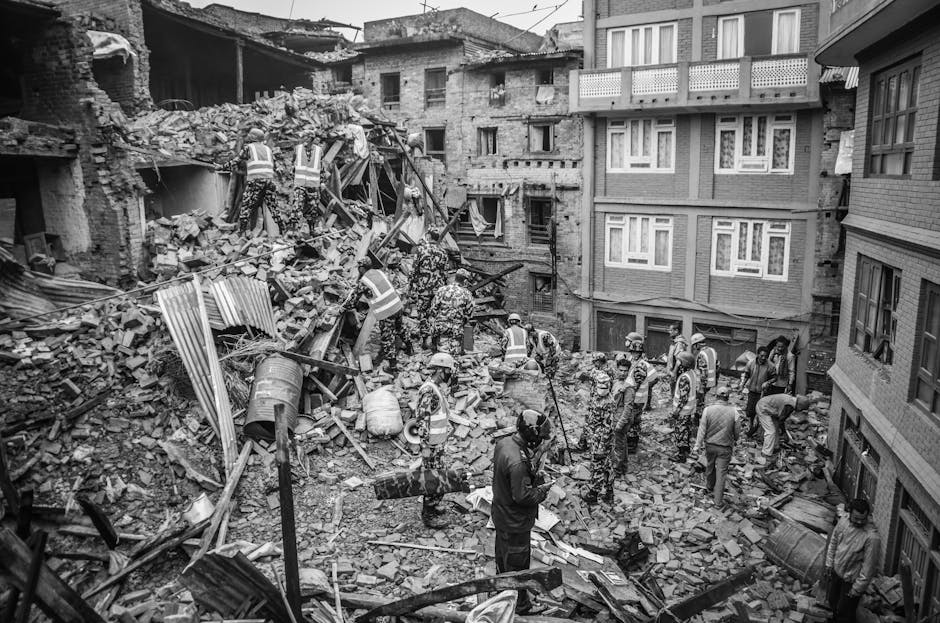
The ground trembles. Seconds count. In the immediate aftermath of a disaster, AI is emerging as a crucial tool in the frantic race to locate survivors. Drones equipped with advanced computer vision, for example, can sift through rubble far faster than human teams. These algorithms are trained to identify human forms, specific colors of clothing, or even the sound of distress calls against a backdrop of chaos.
Currently, this isn't science fiction; it's evolving reality. Take the work being done by groups like DroneSAR, which partners with emergency services. They use AI to analyze drone imagery, slashing search times significantly. Traditional methods could take days to thoroughly canvas an area. AI can potentially narrow that timeframe to hours, increasing the chances of finding victims alive.
But the promise faces real-world hurdles. Image recognition algorithms are often trained on datasets that lack diversity. Think about it: are they equally adept at identifying individuals wearing traditional clothing from different cultures, or those with darker skin tones obscured by dust and debris? This raises serious equity concerns.
The deployment of AI in search and rescue also demands robust infrastructure. What happens when cell towers are down, and power grids are compromised? Edge computing, processing data directly on devices like drones, becomes critical. The market size for edge AI in disaster response is projected to reach over $5 billion by 2027, suggesting significant investment in overcoming these connectivity challenges.
Furthermore, the speed and efficiency of AI must be balanced with human oversight. Algorithms flag potential locations, but ultimately, trained rescuers must make the final judgment. The algorithm is a tool, a powerful one, but never a replacement for human intuition and ethical considerations.
Mapping the Mayhem: Real-Time Damage Assessment from the Cloud
Mapping the Mayhem: Real-Time Damage Assessment from the Cloud
Mapping the Mayhem: Real-Time Damage Assessment from the Cloud
The immediate aftermath of a disaster is a vortex of confusion. Knowing where to send help, and what kind of help is needed, becomes a critical race against time. Traditional methods, relying on ground reports or aerial surveys, are often slow and incomplete. Enter AI-powered damage assessment: a game changer that leverages satellite imagery, drone footage, and even social media data to paint a near-instantaneous picture of the devastation.
Cloud computing provides the backbone. Massive datasets, terabytes of imagery, are processed by sophisticated algorithms trained to identify collapsed buildings, flooded areas, and blocked roads. These systems can differentiate between minor damage and structures rendered uninhabitable, offering a granular view previously impossible. Companies like Descartes Labs and Planet Labs are leading the charge, offering subscription services that provide rapid damage assessments to governments and aid organizations.
The speed is staggering. Where manual analysis might take days, AI can produce a preliminary damage map within hours. The market size for AI-driven disaster management is projected to reach $40 billion by 2027, a clear indicator of its growing importance.
However, this technology isn't without its challenges. Image resolution can be affected by cloud cover or smoke, leading to inaccurate assessments. The algorithms need continuous retraining to adapt to different building styles and environmental conditions. Furthermore, integrating this data with existing emergency response systems remains a hurdle. Siloed information slows down decision-making.
Another concern is access. While wealthy nations can readily afford these advanced services, developing countries often lack the resources to implement them effectively. Bridging this digital divide is crucial to ensuring that everyone benefits from AI's life-saving potential. The future demands not just technological advancement, but equitable access to it.
Beyond the Band-Aid: AI's Role in Building Future Resilience
Beyond the Band-Aid: AI's Role in Building Future Resilience
Beyond the Band-Aid: AI's Role in Building Future Resilience
Disaster response is reactive. Resilience is proactive. Artificial intelligence is moving beyond simply reacting to crises; it’s helping communities prepare for the inevitable. This shift involves long-term planning, infrastructure improvements, and a deeper understanding of risk factors.
Imagine a city using machine learning to analyze building codes, geological surveys, and historical weather patterns. The goal? To identify structures most vulnerable to earthquakes or floods before disaster strikes. Market size estimates for AI-powered risk assessment in urban planning suggest a multi-billion dollar industry within the decade.
AI can analyze satellite imagery to pinpoint areas prone to landslides due to deforestation. This information, combined with socioeconomic data, allows authorities to prioritize interventions, such as reforestation projects or the construction of retaining walls. The impact is significant. Fewer homes destroyed. Fewer lives lost.
However, the promise of AI-driven resilience isn't without its challenges. Data availability and quality remain crucial hurdles. Low-income countries, often the most vulnerable to climate change, may lack the robust datasets needed to train effective AI models. Furthermore, algorithms are only as good as the data they are fed. Biased data can lead to flawed predictions, exacerbating existing inequalities. We must ensure equitable access to technology and prioritize data integrity for truly effective resilience-building. The future hinges on it.
The Ethical Earthquake: Navigating AI Bias in Crisis Situations
The Ethical Earthquake: Navigating AI Bias in Crisis Situations
The promise of AI in disaster response is immense, but it casts a long shadow: bias. Algorithms learn from the data they're fed, and if that data reflects existing societal inequalities, the AI will amplify them, potentially exacerbating the crisis for vulnerable populations.
Consider facial recognition software used in search and rescue. Studies have repeatedly shown these systems perform less accurately on individuals with darker skin tones. Imagine a scenario where survivors of color are disproportionately overlooked because the AI struggles to identify them. The consequences are devastating.
This isn't just theoretical. After Hurricane Katrina, data analysis highlighted how recovery efforts prioritized wealthier neighborhoods over poorer, predominantly Black communities. If AI had been involved in resource allocation, trained on similar historical data, it likely would have perpetuated the same discriminatory patterns.
The challenge extends beyond race. Gender bias can also creep into algorithms. For instance, if training data for prioritizing medical evacuations disproportionately features men, the AI might undervalue the needs of pregnant women or individuals with conditions more prevalent in women. Market size estimates suggest the AI in healthcare sector will continue to rapidly grow; we need to ensure the growth is equitable.
Mitigating bias requires proactive measures. Data sets need rigorous auditing to identify and correct imbalances. Diverse teams are crucial for developing and testing AI systems, ensuring different perspectives are considered. Explainable AI (XAI) is also key. We need to understand how an algorithm arrives at its decisions, allowing us to identify and correct biases that might otherwise go unnoticed. Transparency and accountability are paramount. We can't blindly trust algorithms to make life-or-death decisions. Human oversight remains essential.
Frequently Asked Questions
Frequently Asked Questions
Q: How can AI help with early disaster warning?
A: AI can analyze historical data and real-time sensor feeds (e.g., weather patterns, seismic activity) to predict potential disasters and provide earlier warnings.
Q: What role does AI play in search and rescue operations?
A: AI-powered drones can quickly survey disaster areas, identify victims, and map safe routes for rescue teams, improving efficiency and safety.
Q: Can AI assist with resource allocation during a disaster?
A: Yes, AI can analyze needs assessments and logistical data to optimize the distribution of supplies, personnel, and equipment to the areas that need them most.
Q: How does AI improve communication after a disaster?
A: AI can facilitate communication by automatically translating messages, summarizing critical information, and identifying misinformation spreading online.
Q: What are some limitations of using AI in disaster response?
A: AI's effectiveness depends on data availability and quality. It also requires reliable infrastructure and careful oversight to avoid biases and ethical concerns.
Disclaimer: The information provided in this article is for educational and informational purposes only and should not be construed as professional financial, medical, or legal advice. Opinions expressed here are those of the editorial team and may not reflect the most current developments. Always consult with a qualified professional before making decisions based on this content.